
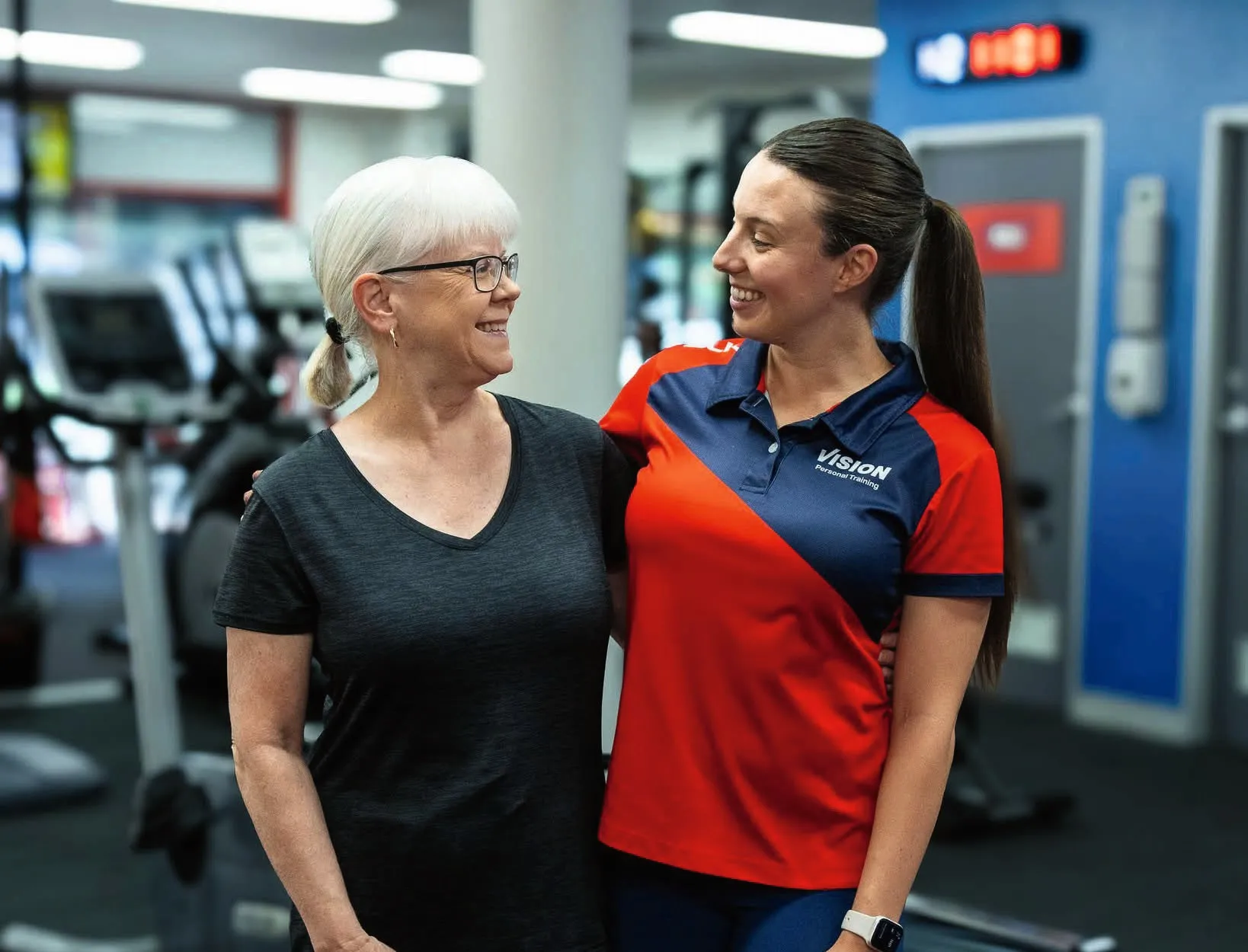
The truth is, it doesn’t have to be overwhelming or involve drastic changes. This is something we’ve specialised in for over 25 years—helping women achieve lasting results. With exciting new research finally shining a light on women’s health, we’re here to cut through the noise and show you what training and nutrition should really look like to help you thrive through perimenopause, menopause and beyond.
This stage of life often brings a wave of unexpected physical and emotional changes, largely driven by the natural decline in oestrogen. This shift can impact almost every system in the body – temperature regulation, memory, sleep, bone density, cardiovascular health and mental wellbeing. It’s important to remember that every woman’s experience is unique, and there’s no one-size-fits-all approach. That said, there are some general recommendations when it comes to nutrition and training that can make this transition smoother and support long-term health.
Nutrition: Fuel and Nourish Your Body
After years of being sold restriction and diet culture, it’s time to shift the focus to nourishment. Protein is especially important during menopause to preserve muscle mass, support mood and balance hormones. Loss of muscle can reduce bone density, affect quality of life and increase the risk of falls and fractures—protein helps protect against this. A rainbow of vegetables and whole foods provides fibre, antioxidants, and nutrients that support gut health, liver function and hormonal balance. Healthy fats from olive oil, avocado, nuts and seeds benefit brain and heart health, while limiting alcohol, caffeine, and processed foods can ease symptoms like hot flushes, poor sleep, and mood swings. We don’t need to overcomplicate it—focusing on whole, unprocessed foods and getting enough protein will set you up for success.
Exercise: A Non-Negotiable
Strength training is one of the most powerful tools for managing menopause. It helps maintain and build muscle mass, improve bone density, support metabolic health and boost mood. Committing to at least two weight sessions per week, ideally within a structured programme guided by a trainer, can ensure you hold onto the strength and mobility that keep you healthy and capable for life.
Menopause doesn’t have to signal decline—it’s a transition, not an ending. This stage can be an opportunity to reassess, realign, and truly thrive. If you’re feeling unsure of where to start, our research-based programmes and personalised support are designed to help women achieve their goals through this stage of life. Discover how strongHER can give you the tools and guidance you need to feel strong, confident, and in control at www.visionpersonaltraining.com/strongher
