
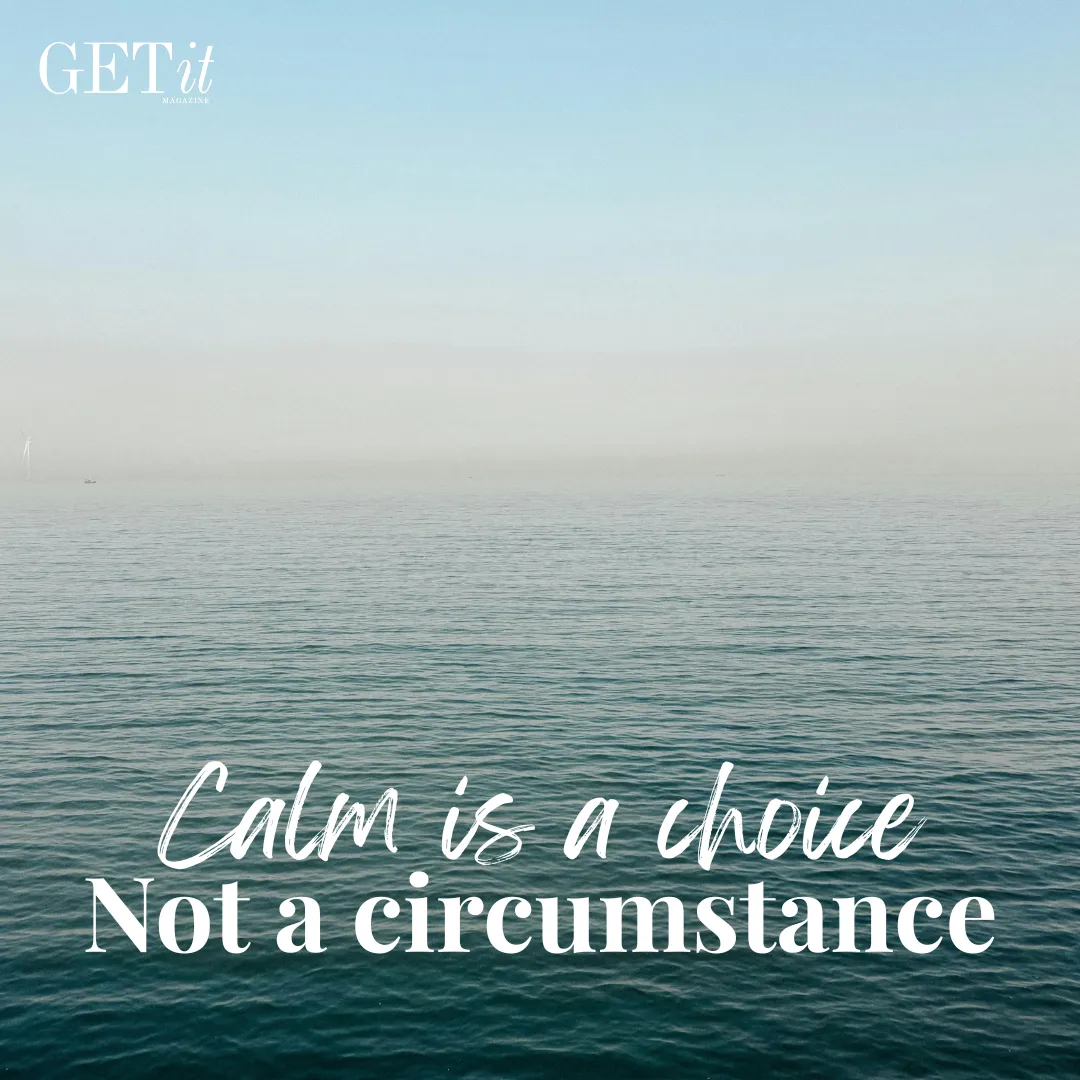
In a world that moves quickly and reacts even faster, calm is often mistaken for the absence of chaos. But true calm is not found in perfectly managed environments or conflict-free lives. It is found in the quiet, deliberate space between stimulus and response, where choice lives.
Every day, we are presented with moments that test us. A sharp email. A difficult conversation. A situation that feels unfair or out of our control. The instinct is to react, to match intensity with intensity, to defend, to escalate, to prove. Yet this is where calm quietly offers an alternative.
Calm is not passive. It is not avoidance, nor is it silence in the face of difficulty. It is an active, internal decision to pause. To step back from the immediacy of emotion and ask: How do I want to respond here?
This distinction, between reaction and response, is where personal power resides.
When we react, we hand over control to the situation. Our emotions lead, often fuelled by past experiences, assumptions, or heightened stress. When we respond, we reclaim authorship. We choose our tone, our words, our timing. We remain grounded in who we are, rather than being shaped by what is happening around us.
There is a discipline in this. It requires awareness. It asks us to recognise when we are being pulled into someone else’s urgency, someone else’s conflict, or someone else’s emotional state. And then, consciously, to return to our own centre.
This is what it means to “stay in your lane.”
Staying in your lane is not disengagement; it is clarity. It is understanding what is yours to carry and what is not. It is resisting the urge to absorb, fix, or react to everything that comes your way. It is choosing measured, intentional action over impulsive reaction.
In high-conflict environments, whether in relationships, workplaces, or during life transitions. This becomes even more critical. Calm does not remove the challenge, but it transforms how you move through it.
Peace, then, is not something you wait for. It is something you practice.
And often, it begins with a single, powerful choice: Not to react, but to respond.
