
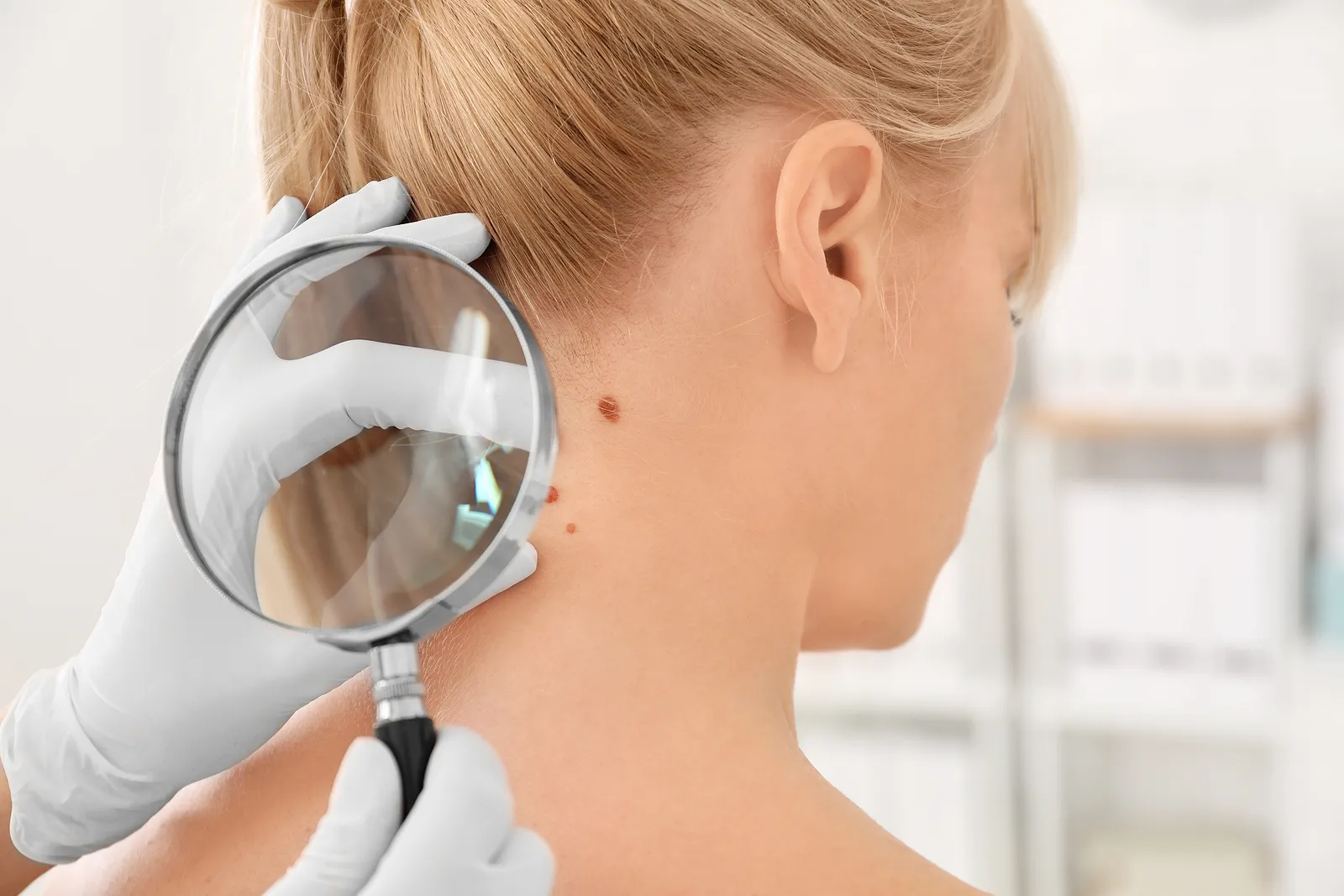
What You Need to Know About Skin Cancer
Why regular skin checks should be part of your health care
Australia has one of the highest rates of skin cancer in the world. More than two in three of us will be diagnosed with some form of it in our lifetime – a statistic that makes understanding this disease not just useful, but essential.
The primary culprit? Ultraviolet (UV) radiation from the sun. While we all love our outdoor lifestyle, that exposure adds up over the years, especially for those with fair or freckled skin, a family history of skin cancer, or simply the passing of time. The good news is that when caught early, most skin cancers are highly treatable.
So, what exactly should you be looking out for?
There are three main types of skin cancer, and each behaves differently. Basal cell carcinoma (BCC) is the most common, accounting for roughly two-thirds of all cases. It develops in the top layer of skin and, while it can cause local damage, it rarely spreads to other parts of the body. You might notice it as a pearly bump, a flat flesh-coloured or pinkish patch, or a sore that heals and then returns.
Squamous cell carcinoma (SCC) makes up about one in three skin cancers and tends to appear on sun-exposed areas like the face, ears, hands, and arms. It often looks like a firm red bump, a scaly patch, or a sore that doesn’t heal. Left untreated, SCC can spread, which is why early detection matters.
Then there’s melanoma – the one that rightly gets the most attention. Although it accounts for only around one per cent of skin cancers, melanoma is the most dangerous because it’s more likely to spread to other parts of the body. It often appears as a new or changing mole, so any spot that’s asymmetrical, has uneven borders, varies in colour, or is growing in size should be checked without delay.
There are also rarer types, including Merkel cell carcinoma, angiosarcoma, and dermatofibrosarcoma, but these are far less common.
A useful rule of thumb for checking moles is the ABCDE guide: look for Asymmetry, irregular Borders, uneven Colour, a Diameter larger than six millimetres, and any Evolving changes in size, shape or feel. If anything ticks even one of those boxes, get it checked.
When it comes to treatment, options depend on the type and stage of the cancer. Surgery to remove the affected area is the most common approach, but your doctor may also recommend cryotherapy (freezing), topical creams, or radiation therapy. For more advanced cases, immunotherapy and targeted therapy have become increasingly effective. The earlier it’s found, the simpler and more effective treatment tends to be.
Prevention remains your strongest line of defence. Wear SPF 50+ sunscreen daily – yes, even on cloudy days – and reapply every two hours when outdoors. Seek shade during peak UV hours (typically between 10am and 3pm), and cover up with broad-brimmed hats, sunglasses, and protective clothing. Most importantly, make regular skin checks part of your routine. Whether that’s a self-check at home every few months or an annual visit to your GP or dermatologist, staying vigilant is the single best thing you can do.
Your skin is worth paying attention to. A five-minute check could save your life.

‘Dr Maria Macaspac at Medical @ Australia Fair has a special interest in skin cancer detection and recently diagnosed a squamous cell carcinoma on my leg, which was immediately attended to and resulted in no further surgery.I’m thankful that she picked it up so quickly.’ Leanne Hart
DISCLAIMER
This article is intended for general informational purposes only and does not constitute medical advice. Always consult a qualified healthcare professional for diagnosis, treatment, and personalised health guidance. If you notice any changes to your skin, see your GP or dermatologist promptly.
