Charities

Being There When It Matters

Being There When It Matters

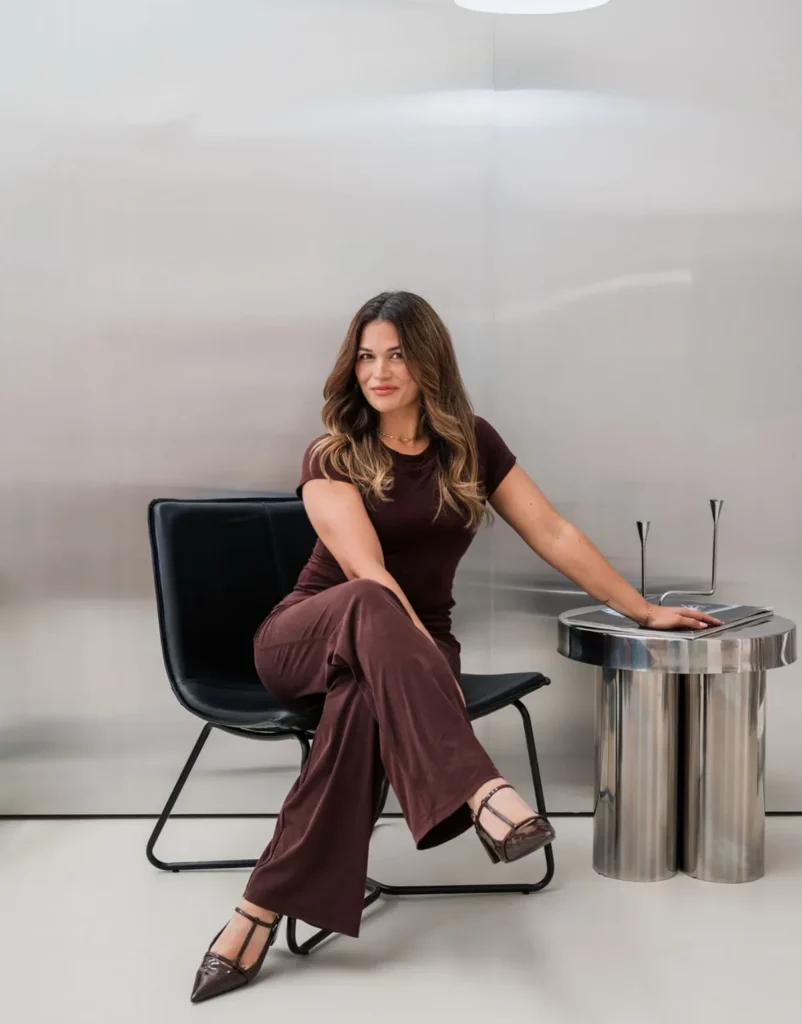
For new Be There Foundation CEO Jesse de la Croix, tackling domestic and family violence means more than raising awareness. It means showing up, offering practical help and creating a Gold Coast community where no one has to face their hardest days alone.

For Jesse de la Croix, stepping into the role of CEO of Be There Foundation feels like a natural progression of work that has long been centred around empowering women, creating connection and telling stories that matter.

With a background in the arts, Jesse has spent around 15 years leading teams and businesses, with much of her work focused on the power of words, art and storytelling.

“My work has always centred around empowering women through words, connection, art and storytelling, which I aim to bring to this role also,” she says.

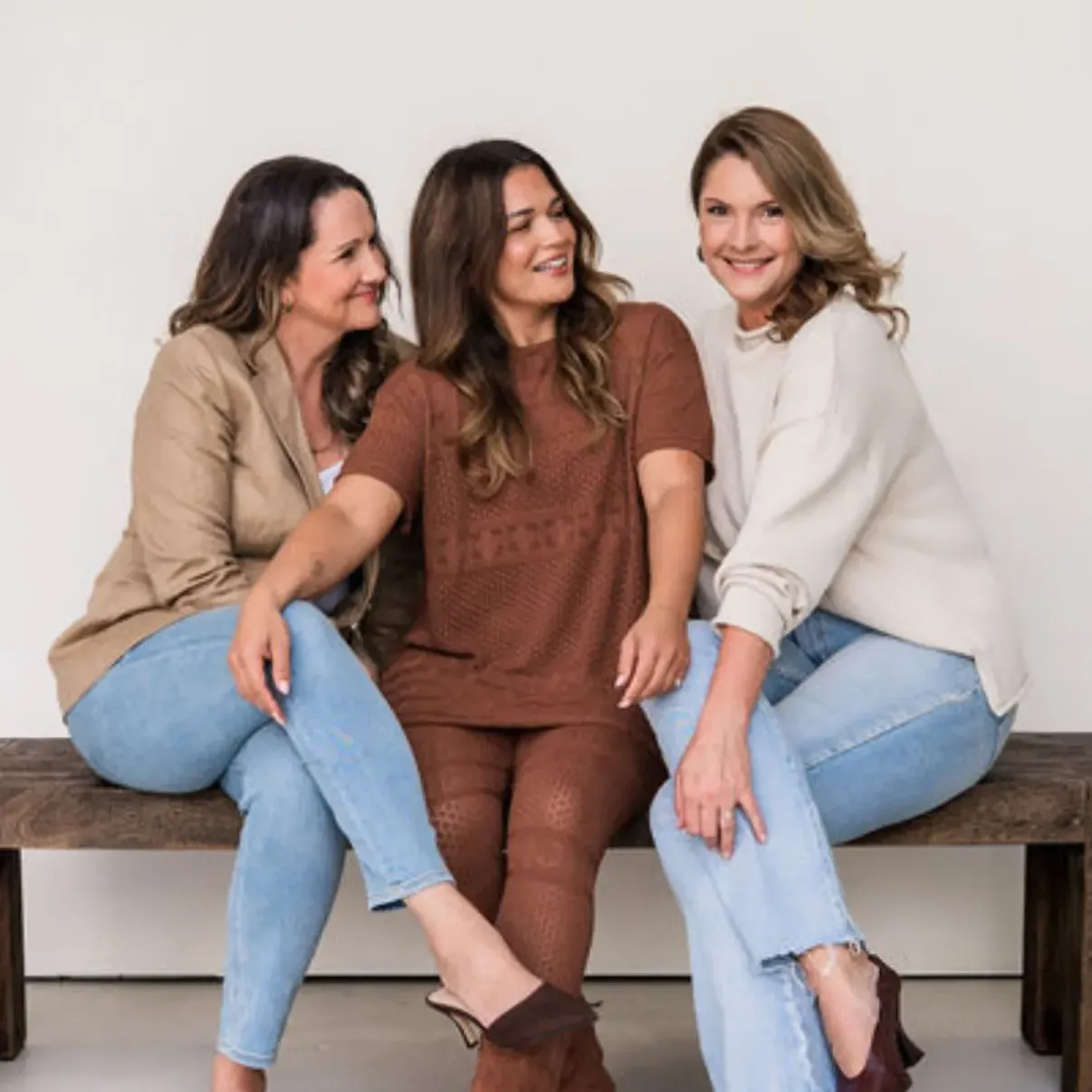
In recent years, her own lived experience led her to Be There Group founders Shaan Ross Smith and Kirsty Tschirpig, who went on to establish Be There Foundation.

“We instantly connected,” Jesse says. “The pull to pour my heart into this line of work felt truly aligned, so when the opportunity was presented I jumped right in.

“It is an honour to be a part of the incredible team and to be able to help build the heartbeat of the foundation.”

Jesse had already been working with Be There Group, which delivers bystander training across Australia and Aotearoa New Zealand, teaching everyday people how they can safely respond when they witness harmful behaviour.

But through that prevention work, another need became increasingly clear.

“Be There Foundation was born out of seeing the need that there was more that we could do,” Jesse says.

“This work is all about supporting those who unfortunately have been affected by domestic and family violence who may have fallen through the cracks when it comes to support in the community.”

The foundation provides practical, individualised assistance to victim-survivors, working alongside existing support services to help fill gaps that can leave people without the help they need.

At the same time, Jesse wants the organisation to help bring conversations about domestic and family violence out into the open.

“With curiosity and kindness at the heart of every conversation, we believe that in better understanding the drivers of the behaviour that results in domestic and family violence, we can better support each other,” she says.

For Jesse, that community approach is particularly important on the Gold Coast.

Behind the statistics, she says, are thousands of people living with fear and abuse in their own homes, including many whose experiences may never be reported to police.

“Bringing this issue into the community and empowering us all to safely help a colleague, a neighbour, a teammate, a friend when something seems off, rather than burying our heads in the sand, can create positive impact,” she says.

The pressures facing victim-survivors are also becoming increasingly complex, with the cost-of-living and housing crises making it even harder for some women to leave unsafe situations.

“We have supported a number of women who have been forced to live in their cars and on the streets as a result of their circumstance, and to say it is devastating is a true understatement.”

Although Jesse is relatively new to the CEO role, Be There Foundation is already providing significant hands-on support.

Recently, volunteers gathered at its Yatala warehouse to pack more than 800 care packs for women in need. The organisation has also supported families in crisis, accompanied victim-survivors to court, furnished homes and provided emergency financial assistance.

Jesse describes what comes next as building “the heartbeat and a collective, a community”.

“My vision is more of this,” she says. “It is niche relief, custom support and standing by victim-survivors on their hardest days, reminding them of who they are, that they are supported and they are not alone.”

She has already witnessed what that support can mean.

“I’ve had a front row seat of witnessing this foundation help a victim-survivor not only survive but thrive in life after decades of experiencing domestic and family violence,” Jesse says.

“To know that this foundation has the power to do that and help create generational change is so very important to me.”

For Gold Coasters wanting to contribute, Jesse says support doesn’t have to involve a grand gesture.

Locals can join the Be There Collective and volunteer at packing days, fundraising events or wherever practical help is needed. The foundation will also hold its first Around the World Rolling Lunch fundraiser at Sanctuary Cove on October 10.

For Jesse, who has called the Gold Coast home for 20 years and raised her children here, building that local community of support is particularly meaningful.

“Despite seeing its overwhelming growth over the years, for me it’s never lost its sense of warmth and community,” she says.

“I take great honour in being a part of a community that ensures it leads the way when it comes to caring for one another.”

And that, ultimately, is the message Jesse hopes people take from Be There Foundation: domestic and family violence may be an enormous social problem, but that doesn’t mean individuals are powerless to help.

“You don’t have to scratch too far beneath the surface to find that all of us know someone who is facing this epidemic in some way,” she says.

“It’s time we got curious about the harmful behaviours that have insidiously been normalised that drive this violence, for the sake of our community and future generations.

“If you are curious how you can be part of the change, then Be There Foundation aims to be a safe space for us all to be part of that much-needed conversation.”

GET INVOLVED

Find out more about Be There Foundation at betherefoundation.com.au, follow @bethere.foundation on Instagram or listen to the foundation’s new podcast, @her.epodcast.
IMG_8095.jpg

More from

Charities

More Than a Meal: The Heart Behind Havafeed
Charities

More Than a Meal: The Heart Behind Havafeed

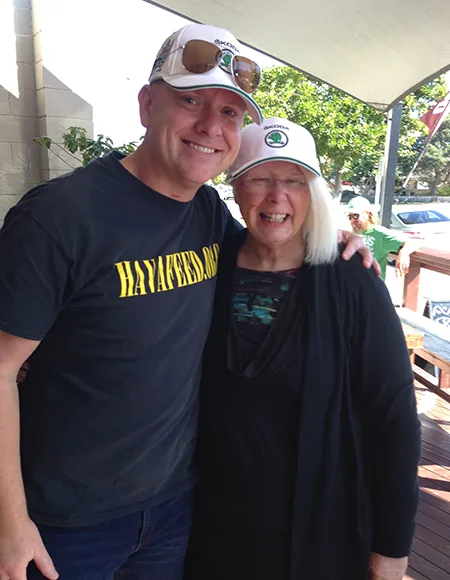
There’s something about a home-cooked meal that really says, well, home. For the team at Havafeed Gold Coast, that feeling is exactly what they set out to create — a warm plate, a familiar face, and a sense of belonging for anyone who needs it. It’s a universal way to make someone feel welcome and cared for after a long day at work or a stressful afternoon juggling schedules. The comfort that comes from sitting down to a plate of your favourite family dish is hard to replicate, no matter how tempting the local takeaway might be. But for those without a home, or without someone to share a meal with, it’s a comfort that is often out of reach. Meet the Founders Behind Havafeed Gold Coast After recognising the need to support people doing it tough during a conversation with friends who had recently lost their jobs, Gold Coast locals Lindsay and Robyn Burch saw an opportunity to make a difference. With a newly discovered family inheritance, the couple decided to buy a van and start collecting loaves of bread from local bakeries in an attempt to bring a little kindness to a community grappling with rising living costs and increasing social isolation. Since then, the parents of three have dedicated their retirement years to founding Havafeed, a not-for-profit charity that provides fresh food and support to the community. [SUGGESTED LINK: Havafeed official website – havafeed.org] As former pastors, the pair’s compassion for others comes as no surprise. What started as a small group of volunteers quickly grew into a place where disadvantaged families, pensioners, people experiencing homelessness and victim-survivors of domestic violence could come for a hot meal and a conversation. More Than a Meal: What Havafeed Offers Most mornings at 4.30am, Robyn and Lindsay are packing the van with supplies and preparing to meet fellow volunteers at the Mermaid Beach Community Centre. Once they arrive, it’s all hands on deck to set up tables and chairs, prepare breakfast and get ready to open the doors at 6am. Going through an average of 10 kilograms of bacon each week, the service provides everything from a freshly made breakfast sandwich to a friendly face and a sense of belonging for Gold Coasters doing it tough. But it’s not just food on offer. Alongside a free Sunday church service, two representatives from Queensland Health’s Homeless Outreach Team are available twice a week to provide support. On Tuesdays and Thursdays, the Orange Sky laundry team also visits with its free mobile washing and drying facilities. [SUGGESTED LINK: Orange Sky Australia – information about their free laundry and showering services] Co-founder Robyn says demand for services like Havafeed continues to grow. While the organisation is busier than ever, she says the people they meet and the visible impact of the service make it all worthwhile. Stories That Make It All Worthwhile Serving thousands of visitors and more than 300 meals each week, Robyn has plenty of memorable stories. One in particular stands out. “I suggested to him that he go home, and he said, ‘I can’t go back there. Nobody would want me,'” Robyn recalls. Lindsay created a Facebook account for the man and, within an hour, five people were looking for him. One offered him a job, while another offered him a car. “They were all there to do what they could to help him,” she says. “Since then, he’s got a better job that he really likes.” He was also able to travel to Melbourne and spend time with his daughter at the Royal Children’s Hospital a week before she passed away. “There’s plenty of stories,” Robyn says. “Just that one sticks in my head.” This September will mark 33 years since the couple began their mission of providing “guidance and hope” to locals. Along the way, they were recognised with the 2024 Senior Australian of the Year award. [SUGGESTED LINK: Senior Australian of the Year award – Australian of the Year Awards website] Gold Coast veteran Michael says the friendship and support he found at Havafeed have been invaluable. “Their positivity and encouragement have lifted me up during some of my darkest moments,” he says. “Thanks to their help, I am now on a path to recovery and am starting to feel like myself again.” Volunteer Anna McHaven, who has been involved with Havafeed for five years, says it is the environment that makes the organisation so special. “Robyn and Lindsay have created a warm and caring place of safety where all are valued and respected,” she says. Of course, the work is not without its challenges. Keeping up with supplies and meeting demand remains an ongoing concern. “We rely on donations and some weeks you’ve got plenty of stuff, some weeks you’ve got half, and then the next week you haven’t got any at all. It’s just like that continuously,” Robyn says. How You Can Support Havafeed Gold Coast It costs approximately $2,000 a week to keep Havafeed running. Along with its generous partners, the organisation relies on community support to continue its work. During opening hours, non-perishable food items and groceries are always welcome at the Mermaid Beach Community Centre, while larger donations can be arranged for collection. Whether it’s setting aside an item from your weekly shop or lending a hand at breakfast, every contribution makes a difference. Havafeed welcomes volunteers and donations year-round. Whether you can spare time, food or funds, your support helps ensure no one in our community goes without. For more information, visit havafeed.org.

Baby Give Back
Charities

Baby Give Back

“If my children can have everything they need, why can’t all babies?”  In late 2016, Carly Fradgley was feeding her one-year-old son Noah when a thought struck her. Her children — Noah and three-year-old Isla — had everything they needed: nappies, clothes, a safe place to sleep. But what about the families who didn’t?  That same day, she came across a Melbourne-based charity on Instagram that collected and redistributed baby items to families in crisis. Carly loved the idea, but there was no such service in Queensland. She could have left it at that, but the thought wouldn’t go away.  “I didn’t know how to start a charity,” Carly says. “But I kept thinking, what if it works? What if I can do it?”  With a few friends and a Facebook page, she launched Baby Give Back. The idea was simple: collect good quality, no-longer-needed baby items and pass them on to families in need. The response was immediate. Spare rooms and garages began filling with donations. But as Carly began speaking to frontline support workers, the true scale of the need became clear — women fleeing violence with only the clothes on their backs, parents skipping meals to afford nappies or formula.  “We quickly realised this was about more than just stuff,” Carly says. “This was about dignity, support, and making sure children have a fair start.”  Carly had no formal background in the not-for-profit sector, but her legal experience helped her get the charity registered and operational quickly. From the beginning, Baby Give Back worked through social workers and support agencies to ensure the right help reached the right people.  “Every box we pack is done with care,” she says. “Clothes are folded neatly, items are checked for safety, and each box includes a note that reads, ‘With love from your community’.”  Since 2016, Baby Give Back has supported more than 50,000 children. In 2025, the charity began its largest expansion to date, reaching communities in Townsville, Mount Isa, Doomadgee, and Saibai Island near Papua New Guinea. It’s part of a broader goal to support 50,000 children every year by 2030.  “Six of the ten most disadvantaged local government areas in Australia are in Queensland,” Carly says. “Our state has high levels of need and is also vulnerable to natural disasters. We have to be ready.”  The organisation’s Clothing Program is now central to its operations. By supplying nappies, wipes, and clothing, Baby Give Back helps families ease financial pressure. That, in turn, reduces stress and supports mental wellbeing.  “When a family’s basic needs are met, they can breathe again,” Carly says. “They can redirect money to food or rent. That changes lives.”  For Carly, the most memorable moments are the ones where the cycle comes full circle. One mother, who received support during a tough time, recently returned with a box of baby clothes to donate. “She said the donations had made a huge difference to her as a new mum. Now that her baby had outgrown the clothes, she wanted to help someone else.”  Support workers frequently share stories that reaffirm the impact. One wrote, “When I presented the box to the mother, she cried. She was so happy, relieved and grateful. The kindness meant more than words can express.”  A typical day for Carly starts early with coffee and a walk around the warehouse to greet volunteers. Then come team huddles, meetings, deep work sessions, and policy and strategy planning. Fundraising, government engagement and expansion efforts all sit on her to-do list. “It’s a big job,” she says, “but I’m fuelled by a very real sense of hope.”  Volunteers remain central to the charity’s success. “They’re the heart of Baby Give Back,” Carly says. “They give their time generously and joyfully. The work we do wouldn’t be possible without them.”  Running a charity comes with challenges, and the COVID years were especially tough. Warehouse closures and growing demand made operations difficult. But the team adapted, knowing families needed them more than ever.  Looking ahead, Carly wants every child in Queensland — regardless of postcode — to have access to essentials in the earliest, most critical years of life. She also wants the broader community to understand that helping doesn’t have to be grand.  “There’s something everyone can give,” she says. “Time, items, money, skills — it all counts. I get to see how those contributions come together to create something so much bigger than any of us could do alone.”  To find how you can get involved go to https://www.babygiveback.org/

Beyond Rescue: How AWLQ Transforms Animal Welfare Across Queensland
Charities

Beyond Rescue: How AWLQ Transforms Animal Welfare Across Queensland

For the past 65 years, the Animal Welfare League Queensland (AWLQ) has provided a safe haven for over 175,000 surrendered and stray animals. The average cost to care for an animal is $750 – and that’s a straightforward case. The organisation never recoups those costs. AWLQ relies heavily on the generous support of their donors to be able to continue to do the lifesaving work they do. At its core, AWLQ is committed to the welfare and protection of animals across Queensland. What many may not realise is the extent of their reach and the breadth of their services. Yes, they rescue and rehome animals, but their impact extends far beyond the shelter walls. One of AWLQ’s most notable initiatives is their Community Vet Clinics on the Gold Coast, Brisbane and Ipswich, which provide vital veterinary services to pet owners who may not have access to affordable care. These clinics not only ensure the health and well-being of beloved pets but also alleviate financial burdens for families who may be struggling to make ends meet. Furthermore, AWLQ operates a wide network of op shops, serving as not only a source of funding but also a sustainable way to support their mission. These shops provide a treasure trove of exceptional goods for bargain hunters, all while raising much needed money for the organisation. The op shops are always in need of quality goods and welcome members of the community to provide donations to any of their sites. Fundraising is a cornerstone of AWLQ’s operations, as the organisation receives no government funding and relies solely on public support. But it’s not just about raising money. It’s about raising awareness, education and fostering a sense of community around their cause. From marathons, to bake sales, to corporate sponsorships, each fundraising event serves as a reminder of the collective power we possess to make a difference in the lives of thousands of shelter animals in need every year. Yet, despite their comprehensive approach to animal welfare, some may perceive AWLQ solely as a shelter, unaware of the myriad ways they serve and educate the community and seek to raise money to continue to support people and animals in need. Others may underestimate the impact of their op shops or overlook the critical importance of their community vet clinics and the affordable vet care model. It’s time to dispel these misconceptions and shine a light on the true essence of AWLQ. They are not just a shelter; they are a lifeline for animals and humans alike. They are not just a charity; they are a catalyst for change and compassion. But AWLQ can’t do it without help. They desperate need community support in their mission to create a better future for shelter animals. You can donate now at awlqld.com.au

Foster care saves animals
Charities

Foster care saves animals

  Animal Welfare League QLD(AWLQ) foster carer Gemma West isn’t your typical cat owner. When she was living in Germany, with her German husband, she fell in love with a cat she named Lamington. “My husband and I adopted him from a farm in Germany.” We brought him home to Australia from Germany with us. Quarantine stuff was quite the adventure! Lamington was bilingual. I would speak English to him, and my husband would speak German to him. And Lamington would respond to both of us!” After her beloved Lamington passed away, avoid was left in her life. Gemma wasn’t ready for another permanent feline friend, but her love for cats remained. This is how Gemma found her calling as a foster carer for AWLQ. For the past three and a half years, Gemma has opened her home to countless cats and kittens in need (97 in fact!). “I wasn’t really ready to have another cat of my own,” Gemma explains, “but I really liked cats and kittens, and I sort of wondered about having a feline friend around me again.” One of Gemma’s most special fostering experiences involved a mama cat named Puss Puss. Rescued from a caravan park on the Gold Coast, Puss Puss arrived heavily pregnant just before Christmas 2022. Gemma lovingly cared for Puss Puss and her six “Christmas bundle” kittens. Each kitten had a festive name, perfectly complementing their arrival time. Gemma describes Puss Puss as a “great mama cat” who raised her kittens with love. After 14 weeks, the time came for the kittens to find their forever homes. While Gemma admits it’s always difficult to say goodbye, she views it as a success. “I see it as graduation day,” she explains. “They’re ready to go off to their forever family.” Having so much cuteness at her home has made Gemma quite the popular figure for visitors. “A friend of mine and her daughter (I call them socialisation officers) often come over to have a cup of tea and play with the kittens. The kittens get exposure to different people. So when they do go for adoption, they’re already socialised.” FOSTER CARERS NEEDED Fostering with AWLQ is rewarding in many ways. The organisation covers the cost of all the necessities for the fostered animals, including food, litter and even litter trays. Gemma highlights the educational aspect as well, with AWLQ providing training on caring for neonates and other special needs cats. Perhaps the biggest perk is the joy Gemma brings to others. “I’m known as the crazy cat lady at work,” she laughs. “I work remotely, so I spend my entire life on Zoom calls. When I’ve got kittens, I can keep an eye on them all day.” Her colleagues are constantly requesting photos and updates on the feline residents that grace her home office. Even the CEO demands to see the kittens before meetings get underway! Gemma’s passion for fostering is contagious. Her story not only highlights the heartwarming bond between humans and animals but also the sense of community fostered by organisations like the AWLQ. For more information on becoming an AWLQ foster carer, please visit: www.awlqld.com.au/fostering