
Mens Health
Why Grown Men Struggle to Make Friends (And How to Fix It)
Men are losing friends at alarming rates, but most won't talk about it. Here's how to build real connections as an adult.

Health, well-being, lifestyle — Australia’s lifestyle quarterly.
Men are losing friends at alarming rates, but most won't talk about it. Here's how to build real connections as an adult.
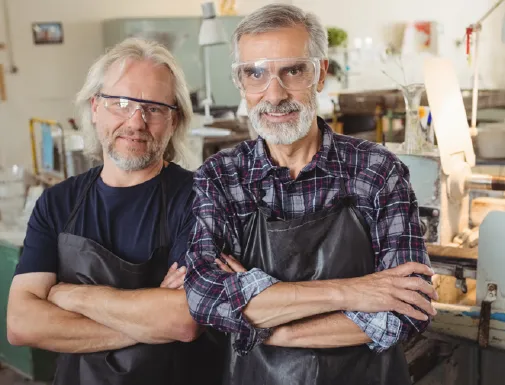
What an 85-year-old’s boredom taught me about what men really need. My dad said something the other night that stopped me mid-sentence. We were talking about nothing in particular, when he announced: “I’m bored.” It wasn’t a complaint. My father doesn’t complain much. It was a statement of fact, delivered by an 85-year-old man with good eyesight, good hands, and better stories than most people have sense to listen to. A man who used to run Rotary events, who fielded phone calls from members at all hours, who was always organising this or that. I’d never heard him use that word before. Bored. It sat between us like something broken. I started rattling off suggestions—things to fill the hours, activities different from his very regular routine. But I was missing the point. It wasn’t about doing something. It was about the shape his life had lost. Rotary had given him more than a project list. It had given him people who needed him, a phone that rang, a reason to be somewhere on Thursday nights. At some stage, the commitment got too much for his age, so he stepped back. The shed closed quietly. And now he was bored in a way that no hobby could fix. That’s when someone on a local Facebook page made an observation. A bloke had just moved from Sydney, posted looking to make friends, and within hours came a suggestion that stood out from all the others: join a Men’s Shed. I’d heard of the Sheds before—mostly in passing, the way you hear about things without really knowing what they are. But sitting there listening to my dad, I started digging. What I found wasn’t just a solution for him. It was something I’d been missing in my thinking about loneliness, about men, about what happens when the structure of your life falls away. WHAT A MEN’S SHED ACTUALLY IS Here’s what a Men’s Shed actually is: part workshop, part gathering place, entirely unpretentious. Walk in and you might see men restoring bicycles, fixing lawn mowers, or building furniture for local schools. You’ll see younger blokes learning from older ones, picking up skills and something about life in the process. But you’ll also see tea-bags, coffee cups, and a comfortable area where men can sit and talk—no agenda, no obligation. You can drop in for a cuppa. You can stay for a project. You can do both or neither. The point isn’t productivity. The point is presence. As one veteran shedder put it: “Down at the shed, we’ve got blokes who come in because it’s the only social interaction they get. Apart from Meals on Wheels or saying G’day to the shopkeeper when they buy their morning paper. And you know what? That’s bloody alright. That’s what the shed’s for.” It sounds small. It isn’t. THE COST OF LONELINESS Loneliness operates quietly. It doesn’t announce itself. It whispers that you’re fine with your own company—which you are, up to a point. Then it suggests you don’t need what you used to have. Then it becomes true. The research is blunt about the cost. Isolation carries mortality risks comparable to smoking. It’s not metaphorical damage. It’s the kind that shows up in hospital records and coroner’s reports. But there’s something else happening at the Sheds, something the statistics don’t quite capture. Men don’t often admit they need their mates. We’re taught to be self-sufficient, to sort ourselves out, to not make a fuss. But in a shed-with the noise of tools, with something to do with your hands, with permission to sit quietly or talk endlessly-that teaching gets quietly overridden. Connection happens. Not forced. Not therapeutic. Just… there. It keeps the wheels turning. It’s what some researchers call “fella-friendship”- kind of connection men build shoulder-to-shoulder, rather than face-to-face. WHAT I DIDN’T EXPECT TO FIND What strikes me now is how many versions of this problem I see around me. There’s my dad, structured out of structure. There’s the bloke from Sydney, starting over in a new place, needing to know where his people are. There’s the man isolated by choice or circumstance, ticking over on Meals on Wheels and morning paper transactions, waiting for permission to sit somewhere and belong. And there’s me. I didn’t realise what I was looking for when I started researching the Sheds. I thought I was trying to fix my dad. I was actually noticing something about myself – that I’d stopped paying attention to the men around me, that I hadn’t thought about what happens when a man loses his anchor, that I’d assumed boredom was a personal failure rather than a sign of a life missing something real. The Shed works because it doesn’t pretend to be therapy. It’s not trying to save anyone. It’s just a place where men can show up, make a cuppa, have a chin-wag, maybe build something, and know that showing up is enough. That the company matters. That they’re not alone. My dad hasn’t joined yet. But I’ve stopped trying to convince him. Instead, I’ve told him where the local one meets. I’ve mentioned that the bloke who runs it is good company. And I’ve left it at that – which, it turns out, is exactly the right move. Because the Shed isn’t about being saved. It’s about being seen. And sometimes that’s all a man needs to stop being bored. For more information and to find a Men’s Shed near you go to mensshed.org

How Men of Business is making a difference Today’s young men face a range of challenges that can lead them down troubling paths. Thankfully, the Men of Business (MOB) Academy is offering a lifeline to boys who have disengaged from mainstream education, helping them build better lives. Why MOB Was Created MOB was founded with a simple yet powerful mission: to guide young men into adulthood equipped with respect, resilience, and responsibility. With the help of strong mentors and positive relationships, MOB has become a transformative space for boys currently from years 11 & 12 who need a fresh start. It is more than just a school—it’s a place where boys can develop not only academic skills but also life skills. Since opening its doors in 2020, MOB Academy has made a massive impact on the lives of over 600 boys, many of whom would have otherwise fallen through the cracks. The numbers are impressive: Not only have these boys earned vocational qualifications, but they’ve also found jobs. The academy is a place of second chances, where young men can rediscover their potential and set themselves on a path to success. The Growing Need The need for programs like MOB is greater than ever. Youth disengagement, school dropout rates, and youth crime continue to rise, with some boys turning to destructive behaviour simply because they don’t see another way. Did you know that suspensions from’’ school are at an all-time high, and the cost of keeping one young man in the youth justice system can be as high as $680,000? Without intervention, many young men who leave school early face uncertain futures, often leading to long-term unemployment or worse. MOB steps in to break this cycle. By providing vocational training, career guidance, mental health support, and even meals for families in need, MOB is creating real change. It’s a holistic approach that doesn’t just focus on education but on every aspect of a boy’s well-being. The New MOB HQ The next chapter for MOB is the creation of MOB HQ—a state-of-the-art facility in Southport that will open its doors in 2027. This centre will accommodate up to 450 boys and offer education, hands-on vocational training, a wellness hub, and even a community centre. The boys who come through MOB HQ will not only receive an education but will also learn trades and life skills that can set them on the path to a successful, fulfilling future. . The Power of Community None of this would be possible without the help of the local community. Building MOB HQ is a massive undertaking, and it will require the support of people who believe in giving these boys a brighter future. Thats why MOB has launched a major fundraising campaign, asking the community to buy symbolic bricks for $1,000 each. These contributions will help raise the funds needed to build the new centre and expand MOB’s life-changing work When we come together to support programs like MOB, we’re not just investing in the lives of these boys—we’re investing in a better future for everyone. To donate or get involved, contact Marco and the Men of Business Academy team today. Your support could make all the difference. [email protected] Menofbusiness.com.au Note: All donations are tax deductible. What started as a small initiative by Marco Renai, a 2024 QLD Australian of the Year, has blossomed into an incredible program that’s changing lives on the Gold Coast. Now, MOB is launching its most ambitious project yet: the new MOB HQ.