Health and Wellness

Thriving through menopause

Thriving through menopause

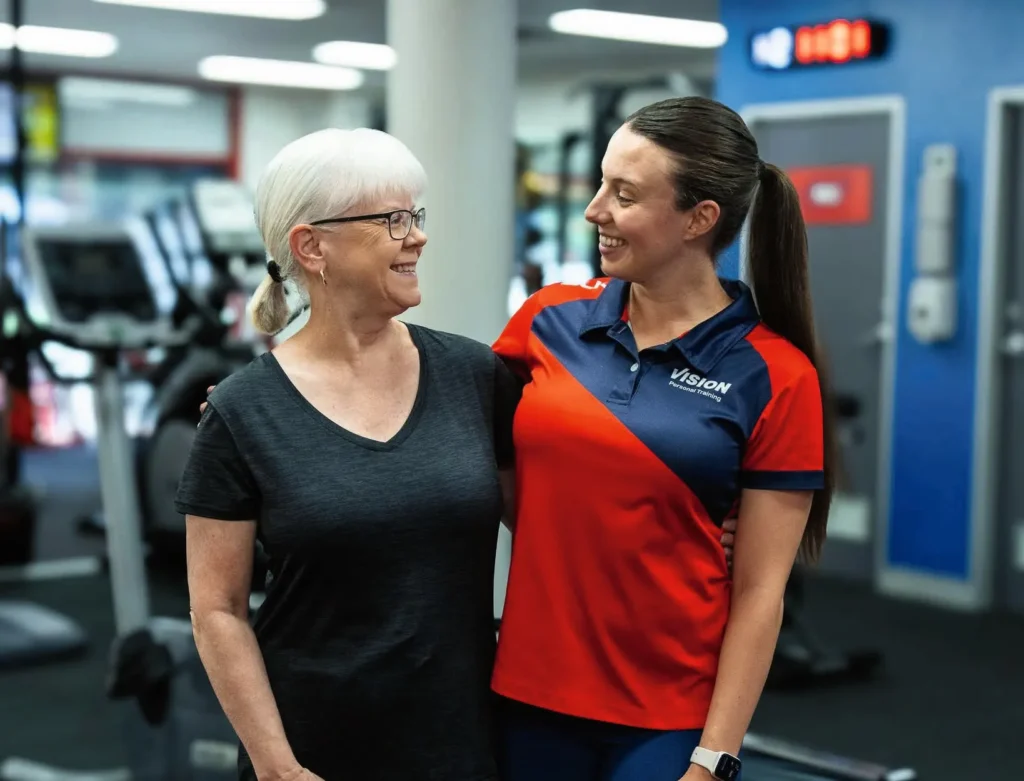
The truth is, it doesn’t have to be overwhelming or involve drastic changes. This is something we’ve specialised in for over 25 years—helping women achieve lasting results. With exciting new research finally shining a light on women’s health, we’re here to cut through the noise and show you what training and nutrition should really look like to help you thrive through perimenopause, menopause and beyond.

This stage of life often brings a wave of unexpected physical and emotional changes, largely driven by the natural decline in oestrogen. This shift can impact almost every system in the body – temperature regulation, memory, sleep, bone density, cardiovascular health and mental wellbeing. It’s important to remember that every woman’s experience is unique, and there’s no one-size-fits-all approach.  That said, there are some general recommendations when it comes to nutrition and training that can make this transition smoother and support long-term health.

Nutrition: Fuel and Nourish Your Body

After years of being sold restriction and diet culture, it’s time to shift the focus to nourishment. Protein is especially important during menopause to preserve muscle mass, support mood and balance hormones. Loss of muscle can reduce bone density, affect quality of life and increase the risk of falls and fractures—protein helps protect against this. A rainbow of vegetables and whole foods provides fibre, antioxidants, and nutrients that support gut health, liver function and hormonal balance. Healthy fats from olive oil, avocado, nuts and seeds benefit brain and heart health, while limiting alcohol, caffeine, and processed foods can ease symptoms like hot flushes, poor sleep, and mood swings. We don’t need to overcomplicate it—focusing on whole, unprocessed foods and getting enough protein will set you up for success.

Exercise: A Non-Negotiable

Strength training is one of the most powerful tools for managing menopause. It helps maintain and build muscle mass, improve bone density, support metabolic health and boost mood. Committing to at least two weight sessions per week, ideally within a structured programme guided by a trainer, can ensure you hold onto the strength and mobility that keep you healthy and capable for life.
Menopause doesn’t have to signal decline—it’s a transition, not an ending. This stage can be an opportunity to reassess, realign, and truly thrive. If you’re feeling unsure of where to start, our research-based programmes and personalised support are designed to help women achieve their goals through this stage of life. Discover how strongHER can give you the tools and guidance you need to feel strong, confident, and in control at www.visionpersonaltraining.com/strongher

More from

Health and Wellness

The Rise and Rise of Hypnotherapy
Health and Wellness

The Rise and Rise of Hypnotherapy

You’ve probably slipped into a hypnotic state today. You just didn’t call it that. Have you ever driven somewhere familiar and suddenly realised you have no memory of the last few kilometres? You weren’t asleep, your attention simply wandered while your brain handled it automatically. We all experience periods of absorbed attention, which can also feel like daydreaming. Hypnotherapy uses that same state, guided deliberately toward a therapeutic goal. You may have heard of the lovely story about a man who asked his gardener what made his plants grow so beautifully. The gardener replied: “I don’t force them to grow. I remove what stops them. I pull out the weeds that are strangling their growth, clear the space around them, and position healthy plants to better receive the sunlight they need.” That is how I think about hypnotherapy. Sometimes old patterns, beliefs and emotional responses have shaped the way we think, feel and behave for years. We may consciously know we want something different, yet still find ourselves responding in the same familiar way. Hypnotherapy aims to explore what’s underneath those patterns, and may help loosen what’s no longer serving us, making room for new ways of thinking, feeling and doing. So, what does hypnotherapy actually feel like? You remain awake and aware. You can hear, speak, think and open your eyes at any time. For many people, hypnosis is experienced as deeply relaxing and focused. The outside world may feel less important as attention becomes absorbed in the therapist’s voice and suggestions. Depending on the goal, hypnosis might involve exploring a different perspective, rehearsing a new response, strengthening confidence or working with an unwanted habit or emotional pattern. But isn’t that just meditation? Not quite. Meditation helps us become still. Hypnotherapy uses that same focused, relaxed state and gives it direction and purpose. Meditation generally aims to cultivate awareness, presence and calm. Hypnotherapy uses focused attention and suggestion towards a specific therapeutic goal, working with thoughts, feelings, behaviours and patterns. What might people seek it for? Stress, anxiety, sleep difficulties, pain management, confidence, self-esteem, unwanted habits and phobias, such as a fear of flying or emetophobia (a fear of being sick), are among the reasons people may explore hypnotherapy. For an HSC student, that might mean a calmer relationship with exams, or reduced performance anxiety. Hypnotherapy isn’t a one-size-fits-all intervention, and no ethical practitioner should promise a particular outcome. What does the science say? For years, some dismissed hypnosis as a parlour trick. Modern neuroscience has given researchers a new way to investigate what actually happens. In a Stanford University study published in Cerebral Cortex, researchers used functional MRI to examine brain activity and connectivity during hypnosis. They observed changes involving networks associated with attention, cognitive control and self-awareness in highly hypnotisable participants. The research doesn’t suggest hypnosis is a magic switch, or that everyone responds the same way. But it does add to growing evidence that something measurable is happening in the brain during hypnosis. From athletes to celebrities and royalty Hypnosis has moved a long way from its stage-show associations. Athletes have explored hypnosis, visualisation and mental rehearsal as part of performance preparation. Dual Olympian Jodi Winter has spoken about her own experience of hypnotherapy, describing coming away feeling “deeply relaxed, clearer and lighter”, and the easing of anxiety she had carried for much of her life as “incredibly freeing.” Catherine, Princess of Wales, has spoken about using hypnobirthing techniques to help her cope with hyperemesis gravidarum, a severe pregnancy sickness condition, as well as during the birth of her three children. Perhaps high performers understand something the rest of us are increasingly recognising: the mind isn’t separate from performance. It is part of it. So why is hypnotherapy rising now? We’re surrounded by notifications, screens and constant demands for our attention, yet many struggle to switch off, sleep, feel confident or simply feel like themselves. Hypnotherapy offers something increasingly precious: deep, focused attention. For many women juggling work, family and everyone else’s needs, that kind of undivided attention on themselves is rare, and it can feel like coming up for air. In a world of surface-level, instant dopamine hits, depth is becoming essential. If that’s something you’re drawn to exploring, who you choose to guide you there matters. Choosing a hypnotherapist When choosing a hypnotherapist, know that the profession, like counselling, is unregulated. Look for the title ‘Clinical Hypnotherapist,’ and as a benchmark, ideally one who is a member of the Australian Society of Clinical Hypnotherapists (ASCH) or the Australian Hypnotherapists Association (AHA), both of which ensure high educational standards, ongoing supervision and continued training. With the right support, there’s a chance to learn something wonderfully new. Disclaimer: This article is for general information only and is not intended to replace medical advice, diagnosis or treatment. If you have a mental health concern, speak with your GP or another appropriately qualified healthcare professional. About the author Justine Williams Founder of The Feel Good Studio and Hyp Little Fairy Tales® Affectionately known as The Fairy Godmother for her work supporting children, parents and families. A highly regarded Clinical Hypnotherapist, speaker and multi-award-winning author. Website Email

A House in the Making – A Scent of things to come
Health and Wellness

A House in the Making – A Scent of things to come

For Paul James Graham, ‘Spencer Rambo’ represents the culmination of more than two decades immersed in hair, fashion and creative direction — and the beginning of something much larger. An award-winning hairdresser, educator, creative director and brand ambassador, Graham’s career has extended beyond the salon into education, editorial, competitions, judging, campaigns and major hair productions. That experience – and a reputation built over many years – now forms part of the foundation of Spencer Rambo.  But Graham is not building it alone. His husband and long-time partner, Paul Dumenil, brings a different perspective. Where Graham’s career increasingly carried him beyond the salon, Dumenil remained deeply immersed within it – connected to the client, the craft and the everyday reality of creating beautiful hair. Their strengths are different, but complementary. Somewhere between Graham’s broader industry experience and Dumenil’s intimate understanding of the salon, Spencer Rambo began to take shape. Not simply as another name in haircare, but as a house – with its own point of view on beauty, fragrance, design and luxury. Its first expression is fragrance. CADENCE; In Perfect Time and ICON; Be Remembered are Spencer Rambo’s inaugural Hair & Body Perfumes. Designed to be worn through the hair and across the body, both feature an impressive 25% perfume concentrate, alongside Sodium Acetylated Hyaluronate – an advanced form of hyaluronic acid chosen for its moisture-binding properties and affinity with the hair. The fragrances themselves are deliberately distinct. CADENCE opens with aldehydes and jasmine, moving through clove, orange blossom and jasmine before settling into marine notes, amber and musk – polished, atmospheric and sensual. ICON moves differently: floral notes and vanilla give way to amber and matcha, grounded by musk, ambergris and sandalwood for warmth, depth and lingering sophistication. They are, perhaps, best understood as perfumes that happen to understand hair. CADENCE and ICON are only the first glimpse inside the house Graham and Dumenil are building. What comes next is being kept deliberately close. For now, the clues are in the legacy of their hairdressing careers – a world beginning to reveal itself. CADENCE and ICON are the invitation. Behind them, the doors to Spencer Rambo are only beginning to open. “As professional hairdressers, we never take for granted the trust someone places in us when they invest their time and money in something we create for them. we want them to feel that same genuine value when they choose Spencer Rambo – in the quality, the formulation and the experience. Luxury can be beautiful and aspirational, but above all, it should be truthful — Paul & Paul

Why you need to put yourself first
Health and Wellness

Why you need to put yourself first

In today’s fast-paced world, it can be easy to focus entirely on your responsibilities – including caring for others – leaving you on the back burner. If you’re constantly prioritising other people, it’s time to take a step back and remember that you deserve some TLC, too. Why is it so hard? There are many reasons why it’s challenging to put yourself first. Our culture for one. If you were surrounded by people telling you taking breaks means laziness or true love means always saying yes, you’ll likely feel pressured to ignore your own needs. Self-discipline, lack of motivation or not knowing how to seek help can also be barriers. You might also perceive the act as selfish, which runs contrary to the essence of prioritising oneself. But here’s why you should. Maybe you’re a parent who must put your children’s needs before your own or the eldest child expected to carry the responsibilities at home. No matter where you are in life right now, here are reasons why you should put yourself first this year. 1 You Risk Burnout When you constantly put other people’s needs above your own, you can drain yourself of energy. You do things like helping a co-worker or doing a favour for your sibling because you feel like you should, leaving you hopeless and exhausted. Show kindness to yourself first so you can show up fully for your loved ones. 2 Your Stress Can Impact Those Around You When was the last time you checked in with yourself and made time for your passion? Occupying yourself with responsibilities can lead to a lifestyle where stress becomes normal. If not addressed, it can affect your health and your relationships with others. 3 You May Lose Yourself in the Process Do you feel like you must be productive all the time? Ask yourself – are you doing it out of necessity or because your inner critic dictates you should achieve goals to be deemed perfect, worthy, and acceptable? It’s time to overcome those internal narratives that may impede your growth.

Get more out of your summer fruit
Health and Wellness

Get more out of your summer fruit

Words: Gabrielle Newman, ‘The Fast 800’ programme Nutritionist With the current cost of living and the price of healthy food on the rise, we know how frustrating it can be to throw away forgotten foods from the back of the fridge. Not only is it costing you money, the environmental impact is huge with annual food wastage totalling approximately 1.3 billion tonnes (that’s one trillion three hundred billion kilos!). Almost half of the fruit and vegetables produced worldwide fall within this number. Understanding how to preserve the freshness of your fruit and veg can save you time, money and be more nutritious. As a Nutritionist for The Fast 800 programme, here are my top tips to extend the life of fresh produce and minimise food waste. 1. Separate high-ethylene producing fruit Ethylene is a natural gas produced by fruit and can accelerate the ripening process of ethylene-sensitive fruit and vegetables. To prevent this from happening, keep fruit that is high in ethylene gas like apples and bananas separate from your other fruit and veg (unless you’re trying to speed up the ripening of your avocados). 2. Invest in storage containers with airtight seals Investing in quality storage containers will slow down the oxidation process and preserve nutritional content. Airtight containers create a protective barrier that helps maintain the purity of the produce – glass is ideal, but any container will do. This simple switch can make a significant difference in extending the shelf life of your fresh fruits and vegetables. 3. Tailor the temperature of your storage Different types of fruits and vegetables thrive in varying temperature conditions, so by tailoring the temperature of your storage you can significantly prolong freshness. For example, tomatoes are best stored at room temperature, while leafy greens prefer cooler environments. 4. Shop smarter Smart shopping is a key component; reducing food waste while maximising nutrient variety. By incorporating smart shopping practices and meal planning, you not only enjoy the benefits of fresh produce and cooking, you will minimise unnecessary waste. 5. Befriend the freezer Frozen vegetables can be just as nutritious as fresh, as they are snapped frozen when harvested. They can also be far more cost- effective as they’re often cheaper and have a longer shelf life once purchased. Incorporate frozen produce into smoothies, stir-fries, and soups for a quick and nutritious addition to your daily meals. 6. Try Top-to-Tail cooking Embrace “top-to-tail” cooking for fruits and vegetables by using the entire plant, including stems, leaves, and peels, in your recipes. This is not only good for the planet, but also enhances the nutritional profile of your meals. An easy switch is to stop peeling your veg, just give them a thorough wash.