Skip to content

Health, well-being, lifestyle — Gold Coast quarterly.

Welcome to our vibrant community showcase, where connections are continuously evolving through meaningful relationships and shared experiences.

Our community represents a diverse tapestry of individuals, organizations, and initiatives that are making a real difference in the world around us.

From innovative crisis management solutions to grassroots animal welfare efforts, each story featured here demonstrates the power of collective action and individual determination.Our local profiles tell the stories of extraordinary individuals that continue to help shape our community.

Crafting Spirits with Heart: The Story Behind Imbibis Distillery
Our Community

Crafting Spirits with Heart: The Story Behind Imbibis Distillery

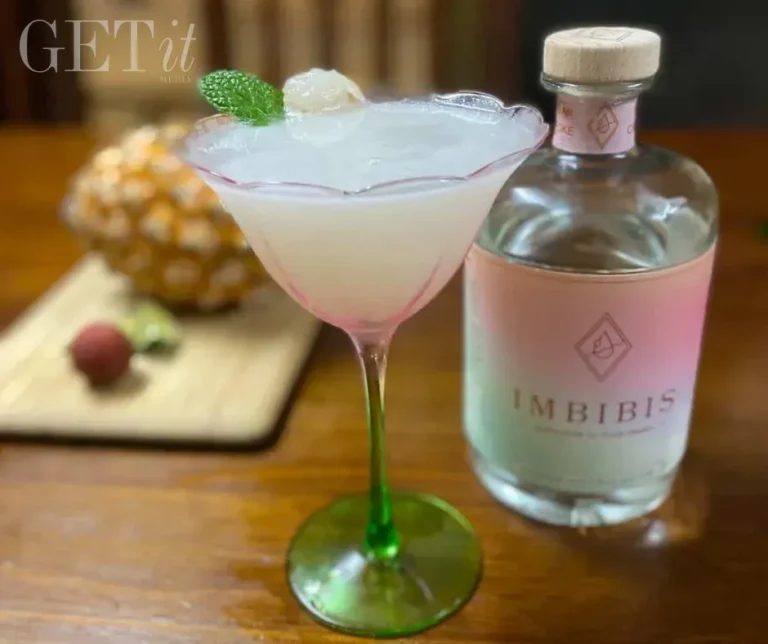
Behind every great craft spirit is a story of passion, persistence and a little bit of courage. For Jason and Maree Hannay, the founders of Imbibis Craft Distillery, that story began with a dream to create something uniquely Australian – and deeply personal. Today, their boutique distillery has earned international recognition for its artisan gins and brandy, but the journey to get there has been just as rich as the spirits themselves. Jason, your background is in winemaking. How did the journey into distilling begin? Jason: I spent more than 20 years working in the Queensland wine industry, so fermentation and flavour were already part of my life. But I’d always had a fascination with distillation – the science and artistry of transforming raw ingredients into something complex and expressive. Eventually, that curiosity turned into a dream to craft my own spirits using local ingredients. That dream became Imbibis.  What was it like launching a distillery from scratch? Jason: Equal parts exciting and terrifying! We officially launched in late 2019, and within months we were navigating a global pandemic. But the response from the local community was incredible. People really embraced the idea of an Ipswich-based distillery producing premium spirits, and that support kept us going in those early days.  Maree, you’ve had a very different career path. How did you become involved? Maree: My background is actually in the corporate and legal worlds. I worked with organisations like Woolworths, BHP and MinterEllison before joining Imbibis full time. But creativity has always been important to me – I’m also a watercolour artist – so stepping into the distillery gave me a chance to bring that creative energy into the brand. These days I wear many hats: marketing, events, customer engagement… and occasionally bottle labelling and glass washing!  Your spirits have already won international awards. What makes them special? Jason: We focus on small-batch production and high-quality local ingredients. Many of our botanicals are native Australian flavours like lemon myrtle, native pepperberry and bottlebrush. The idea is to create spirits that reflect where we live and the ingredients available around us.  What does it mean to see your work recognised on the global stage? Maree: It’s incredibly rewarding. When we started, we simply wanted to make beautiful spirits that people would enjoy sharing with friends. To now see our gins and brandies winning medals internationally is both humbling and exciting. And finally – what’s next for Imbibis? Jason: We’re always experimenting. Distillation is a constant journey of discovery. Whether it’s a new botanical blend, a small-batch brandy or something entirely unexpected, we’re always looking for ways to keep the creative process alive. Stay tuned for launch of Ipswich’s very first whiskey. Coming soon. For Jason and Maree, Imbibis isn’t just a distillery – it’s a celebration of craftsmanship, local ingredients and the simple joy of sharing a drink with good company. imbibis.com.au

Growing strong girls, empowering futures
Our Community

Growing strong girls, empowering futures

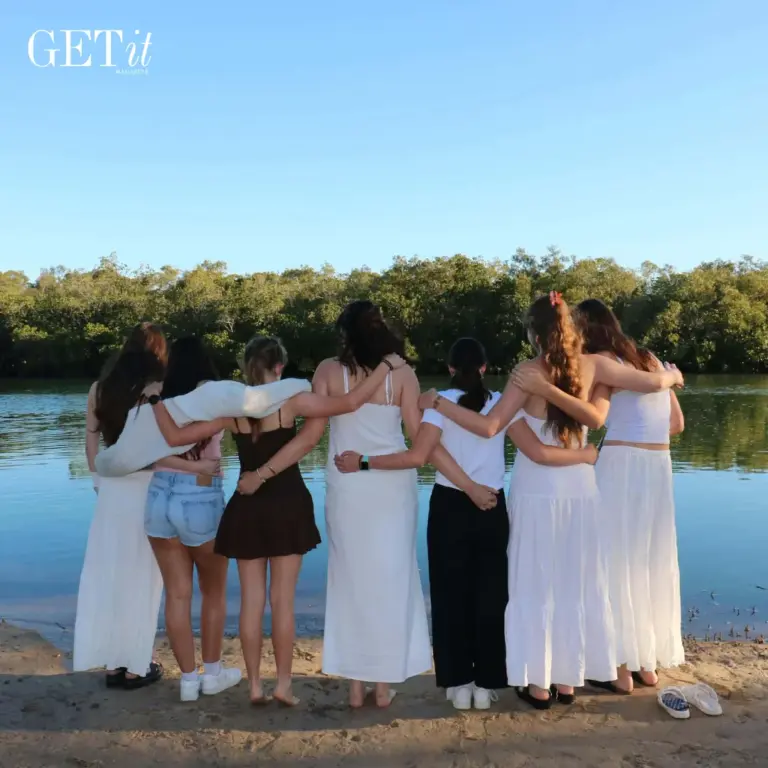
By Megan Stray  More than a decade ago, while working as a kinesiologist in a small clinic beneath my home, I began noticing a pattern that was impossible to ignore.  Young people were arriving not with the usual childhood complaints, but with something far heavier. Seven-year-olds struggling with debilitating anxiety and missing large amounts of school. Ten-year-olds already prescribed antidepressants. Bright, sensitive young girls battling eating disorders far earlier than anyone expected.  Behind every child was a family searching for answers, hoping to find the missing piece that would help their daughter feel safe, confident and whole again. Watching these stories unfold, it became clear that something needed to change.  From that realisation, Heal.ed Tribe was born.  What began as a deeply personal response has grown into a local not-for-profit organisation supporting young girls across the Gold Coast. The first initiative was a small three-day retreat for five girls experiencing eating disorders and their mothers, alongside two teenage girls living in homeless shelters. There was no rigid clinical agenda. The intention was simple: to create a space where young people felt seen, supported and genuinely cared for.  Today, almost eleven years later, Heal.ed Tribe continues to focus on education, prevention and early intervention, helping young girls build resilience and strengthen their mental wellbeing. Every program and conversation is grounded in a core belief that no young person should feel alone in their mental health journey.  The challenges facing young people continue to grow. Experts predict that by 2030, mental health concerns could become Australia’s greatest disease burden, surpassing cancer and heart disease. Yet beyond the statistics are the real stories and quiet breakthroughs that remind us why community support matters.  Because these girls are the women of our future. Watching a young person rediscover hope, confidence and a sense of belonging is powerful, not only for them, but for the families and communities surrounding them.  To learn more or support the work of Heal.ed Tribe, visit healedtribe.org.au 

Elevated Alfresco: A Conversation with Mary Sidey of Dune Outdoor Luxuries
Our Community

Elevated Alfresco: A Conversation with Mary Sidey of Dune Outdoor Luxuries

For more than 17 years, Mary and Ben Sidey have been shaping how Gold Coasters live outdoors. As the founders of Dune Outdoor Luxuries and the exclusive Australian distributor of iconic U.S. brand Brown Jordan, Mary has become synonymous with timeless design, premium craftsmanship, and serene alfresco living. We sat down with her to talk inspiration, luxury materials, and the secrets to creating outdoor spaces that truly feel like home.    The Inspiration Behind the Craft  What inspired your passion for luxurious outdoor spaces?  MARY: I’ve always wanted to create a sanctuary at home – a place for family and friends to relax and enjoy the outdoors. Travelling overseas exposed me to brands that were operating at a higher level. Brown Jordan stood out for its heritage, attention to detail, and marine-grade materials. Becoming their exclusive Australian distributor was a natural step. Their designs from the 1940s are still relevant today — timeless and enduring.    The Art of Effortless Elegance  What’s your secret to transforming an ordinary outdoor area into a sanctuary?  MARY: Layering and using only the best materials. Sunbrella solution-dyed acrylics are non-negotiable for us – they last and elevate every space. I also keep accessories minimal; the furniture should always be the hero. When the design is strong, the space feels calm, inviting, and effortlessly elegant.    Alfresco Trends – and What Lasts  What trends are shaping luxury outdoor spaces?  MARY: I focus on understanding a client’s lifestyle. Onsite consultations help create flow from indoors to outdoors, making the space feel cohesive. I don’t chase trends – create long-term spaces. For apartment living, I recommend deep seating instead of dining, encouraging more use and comfort. Timeless design always wins.    The Dream Outdoor Haven  If you could design your ultimate outdoor space, what would it include?  MARY: A pool and covered seating area layered with an outdoor rug and sheer Sunbrella curtains. An outdoor kitchen with a built-in Weber BBQ, oversized pots filled with lush plants, and furniture that connects seamlessly to the interior. Outdoor rooms should feel just as beautiful and inviting as the indoors.    A Standout Project  Is there a project that holds a special place in your heart?  MARY: One home in Sanctuary Cove stands out. The developer asked me to stage the outdoor areas. I encouraged them to invest in quality furniture, and it transformed the property. Interiors were staged professionally, and I styled the outdoors with Brown Jordan furniture, cushions, and plants. The result? Top-dollar sale — and the buyers purchased all the furniture. It was the perfect example of how powerful outdoor design can be.

From boardroom to belonging.
Our Community

From boardroom to belonging.

Howard Campbell never imagined a life helping others. For decades, he had been climbing the corporate ladder, thriving in high-pressure management roles where results mattered more than relationships. At 68, he admits he “had little time for people” who didn’t share his drive.  Success had been his focus, and with it came a certain blindness. He rarely considered the struggles of those around him until semi-retirement slowed the pace and gave him time to reflect. “I realised many people around me, including family and friends, faced mental health and substance challenges I had once overlooked,” said Howard.  Determined to understand and make a difference, Howard began searching for ways to help. That’s when he discovered the Certificate III in Community Services at TAFE Queensland. Enrolling was the start of a deep personal journey. “I was amazed that at this late stage in my life I could gain insights I’d been blind to all my life,” he said. “Understanding mental health and addiction challenges has been profound. I now see people I once judged differently and I can actually help.”  “I had no intention of going beyond the Certificate III, but the journey was so rewarding I had to continue to Certificate IV,” he said. Today, Howard works as a Support Worker—a role he finds deeply fulfilling after decades of success in business. “I feel like I’m finally contributing to something meaningful. And that’s a feeling you don’t outgrow,” said Howard.  This sense of purpose has brought him a peace and fulfilment that his high-powered corporate roles could never provide.  Howard’s TAFE experience Howard’s decision to study at TAFE Queensland was pivotal in his career shift. The Certificate III in Community Services provided him with the foundational knowledge and skills necessary for his new path.  TAFE Queensland’s Southport campus offers a range of courses in community services, including counselling, youth work, child health and family intervention, individual support and mental health. These programs are designed to equip individuals with the tools to make a positive impact in their communities.  The supportive learning environment at TAFE Queensland, coupled with practical placements, ensured Howard was well-prepared to transition into his new role. His experience highlights the importance of vocational education in facilitating career changes and personal growth.

Hearts of gold: Archer’s design brings hope to sick kids this Christmas
Our Community

Hearts of gold: Archer’s design brings hope to sick kids this Christmas

This Christmas, nine-year-old Archer from Queensland is sharing a little extra joy with families facing one of the toughest experiences imaginable: having a child in hospital.  Archer is one of 11 young patients whose artwork has been transformed into festive wrapping paper and Heart Tokens as part of BIG W’s annual Christmas fundraiser for the Queensland Children’s Hospital Foundation. His cheerful design, complete with Santa, a present and a cookie, captures the magic of the season and the hope that comes with healing.  For two and a half years, Archer has been treated for Lymphoblastic Leukaemia. His journey has included chemotherapy, blood transfusions, surgeries and long stretches in hospital. Recently, he reached a milestone moment many families dream of. He rang the bell at the Queensland Children’s Hospital, marking the end of his active treatment.  During his time in hospital, Archer found joy in the creative programs run by the Queensland Children’s Hospital Foundation. These activities, funded by community donations, gave him moments of normalcy and connection in an otherwise overwhelming time.  His mum, Marta, says the Foundation became a lifeline for their family. “Two and a half years ago, our lives turned upside down. The Foundation was there through every step, from providing emotional support to creating special moments for the kids. After spending a Christmas in hospital, it feels like such a gift to be celebrating this one at home, together.”  Funds raised through BIG W’s Charity Wrap and Heart Tokens go directly to the Queensland Children’s Hospital Foundation, helping support programs that bring joy, comfort and relief to sick children and their families. This year, BIG W has also donated an additional $20,000 to support these initiatives.  Foundation CEO Lyndsey Rice says the need for support continues to grow. “Each year, the hospital treats more than 110,000 children, and one in three come from regional or remote areas. Many families spend the holidays far from home. Thanks to the generosity of the community, we can help make that time a little brighter.”  For Archer and his family, that generosity means something simple and profound: the chance to spend Christmas surrounded by love, laughter and good health once again.

Finding Light in the Storm
Our Community

Finding Light in the Storm

By Andrew Harmer How Young Men Are Turning Eco-Awareness into Action For many teenage boys today, the weight of environmental concerns feels heavier than ever. The devastating floods that hit our region, the bleaching of the Great Barrier Reef, the bushfires that darken our summer skies—these aren’t distant problems anymore. They’re personal, immediate, and deeply unsettling. This growing anxiety about our planet’s future has a name: eco-anxiety. It’s that knot in your stomach when you wonder what kind of world you’ll inherit. For young men especially, who often feel pressure to be problem-solvers and protectors, the enormity of climate change can feel overwhelming. How do you fix something this big? Where do you even start? From Worry to Action But here’s what’s changing on the Gold Coast: instead of being paralyzed by these concerns, young men are discovering that action—even small steps—transforms anxiety into purpose. Take the EcoMarines program partnering with Gold Coast high schools. What starts as worry about ocean health becomes hands-on marine monitoring and dune restoration. Students who once felt helpless about reef bleaching are now collecting data, removing marine debris, and directly contributing to coastal research. The program has seen remarkable growth in male participation, particularly in its technical and fieldwork components. Building Solutions, Building Confidence Across our region, Landcare groups report increasing numbers of young male volunteers joining bush regeneration projects. The physical work—clearing invasive weeds, planting native species, building wildlife corridors—offers something screens and classrooms can’t: tangible, visible impact. Every lantana removed, every native tree planted, represents a small victory against degradation. Community gardens from Nerang to Burleigh have become unexpected hubs where environmental concern transforms into food security action. Young men are learning permaculture principles, composting techniques, and sustainable growing methods. These aren’t abstract concepts—they’re practical skills that build resilience for uncertain times ahead. Catching the Wave of Change Our surf culture is naturally evolving too. Groups like Surfrider Foundation Gold Coast channel ocean love into ocean protection. Young surfers who witness pollution firsthand during dawn patrols are joining beach clean-ups and advocating for better waste management. The connection is immediate: protect what you love. Local schools are responding creatively. Design and technology classes now focus on renewable energy projects. Agriculture programs emphasize regenerative farming. Business studies explore green entrepreneurship. This shift shows young men that environmental challenges aren’t just problems—they’re opportunities for innovation and leadership. The Power of Starting Small The Gold Coast Youth Council’s recent environmental initiatives prove young voices create real change. Their plastic reduction campaigns and urban greening projects started with simple ideas from concerned teenagers and became council-supported programs. The message emerging from all these initiatives is clear: you don’t need to save the world alone. You just need to start somewhere. Join a local group. Learn water testing with Cleanwater Group. Plant trees with Landcare. Build garden beds at school. Each action, however small, chips away at that overwhelming feeling of powerlessness. Moving Forward Together Yes, the environmental challenges are real and the concerns valid. But Gold Coast’s young men are proving that channelling worry into action builds something powerful: community, purpose, and genuine hope for the future we’re actively creating together.

“I Don’t Want to Feel Helpless”: Why Irish Chose Nursing
Our Community

“I Don’t Want to Feel Helpless”: Why Irish Chose Nursing

When Irish Tse lost her grandfather, she felt powerless. But that moment sparked a determination that would shape the rest of her life. “I don’t want to feel helpless anymore,” she says. “I want to contribute to the community.” Now in her second year of a Bachelor of Nursing at TAFE Queensland’s Southport campus, Irish is well on her way to becoming a registered nurse, driven by a clear sense of purpose. Her first patient during placement brought that mission to life. “He had multiple sclerosis,” says Irish. “I saw him get better, and when he thanked me, I knew I was where I was meant to be. It was so rewarding. It still motivates me.” At 28, Irish began her journey with TAFE Queensland’s Diploma of Nursing, which she says prepared her for both the academic and emotional demands of the degree. “It gave me the foundation I needed, not just with writing or assessments, but how to walk into a room, speak to patients, and be confident even when I didn’t have all the answers,” she says. Now working in the cardiac unit at Pindara Private Hospital while completing her bachelor’s, she is already applying her skills in real-life settings, supported by the practical, hands-on approach at TAFE Queensland. “The support at TAFE is incredible. The teachers go above and beyond. They care about you, not just your grades. I’ve never felt like just a number,” she says. “They explain complex theories in ways that actually make sense.” The Southport campus’s realistic training environments and small class sizes gave her the space to grow and the confidence to ask questions without fear. “That’s my advice to other students: be brave. Ask everything. No question is too small,” says Irish. Irish sees her future in emergency care, where adrenaline and critical thinking meet purpose. One day, she hopes to volunteer in remote or disaster-affected communities. “Nursing is never boring. It’s always changing, always growing.” Scholarships available for TAFE Queensland nursing students Becoming a registered nurse just got easier and more affordable, with TAFE Queensland now offering academic scholarships of up to $3,000 for eligible students enrolling in their Bachelor of Nursing program. The scholarships, which are automatically applied upon enrolment, mean students can save up to $750 per unit in their first semester. There is no separate application process or extra paperwork. To find out more, contact TAFE Queensland at tafeqld.edu.au

From Rock Bottom to Incredible Heights
Our Community

From Rock Bottom to Incredible Heights

Meet Allie Pepper Having recently turned 50, Allie Pepper is climbing stronger than ever. But her latest summit isn’t just about breaking altitude records, it’s about reclaiming her life. Australian high-altitude mountaineer Allie Pepper has spent a huge part of her life chasing the clouds and pushing her limits. Get It Magazine spoke with Allie to hear about a recent summit, Kanchenjunga (the world’s third-highest peak at 8,586 metres!) and to learn more about her journey after a series of deeply personal challenges that nearly saw her hang up her climbing boots for good. “I was at rock bottom,” Allie says, reflecting on a time not too long ago when everything seemed to collapse at once. “I’d lost my dad unexpectedly, my marriage had ended, and I was going through severe menopause symptoms. depression, night sweats, insomnia. I didn’t feel like myself. I wasn’t sure if I could ever climb again.” Like so many women, menopause hit Allie by surprise, and it almost ended her climbing journey. At first, Allie didn’t even realise what was happening to her. “I was 46 and had no idea my symptoms were menopause. I saw three doctors before I found someone who understood. Most GPs aren’t trained in menopause properly. It’s so under-recognised.” Eventually, she connected with a Welfem-trained doctor and began hormone therapy, and Allie tells me: “It absolutely changed my life. Within a month, the depression, insomnia, and joint pain started to ease. After a year, I felt like my body had reversed in time. I could build muscle again, recover from training: it was like night and day.” Allie had already completed major climbs in her earlier career, including her first 8,000m summit in 2007, but the dream of completing all 14 of the world’s 8,000-metre peaks without supplemental oxygen (a feat achieved by only a handful of people worldwide) had always burned in the background. “The project was always in my heart, but I hadn’t fully committed. After everything I went through – it just felt like now or never.” As her peaks have progressed, it hasn’t all been smooth sailing. For Allie’s Kanchenjunga climb, funding came late & the weather window was closing. And while Allie had planned to summit without bottled oxygen,  as she had on five other 8,000m peaks, she made the call to use it. “It wasn’t safe without it,” she says. “I was on the edge of a storm at over 8,500 metres. I wanted to survive and come down.” “It’s so extreme up there” Allie explains, “Without supplemental oxygen, your brain is operating with just a third of the oxygen it’s used to. Even when conditions are perfect, your legs can give way. This climb wasn’t about the view — it was survival.” Behind that physical strength, though, is a different kind of work, an ongoing commitment to deep emotional and mental training. “I worked with a life coach for over a year when I began seriously preparing for the 14 Peaks,” Allie explains. “I needed to master my mind, to stop attaching to fear, to outcomes. I meditate daily. I train mentally, emotionally, and spiritually: not just physically.” Now, she says, “I know my body so well. I feel better at 50 than I did at 40. Stronger. Sharper. I’m climbing better than I ever have – better than most men I’ve climbed with. Only one Australian man has achieved more in the 8,000m peaks than I have.” The milestone of turning 50 – which coincided with her descent from Kanchenjunga – was a calm and quiet celebration. “We drove for hours that day and stayed in this remote hotel. I went to sleep at 8pm. The next day we celebrated in Kathmandu with some incredible female climbers. It was perfect.” She laughs when asked if this was the life she imagined at 30. “Not at all. But I also never imagined how much was possible!” As this next chapter of her life unfolds, Allie is working on a short film about the climb and considering a full documentary. “This journey is about more than mountains. It’s about showing people that it’s never too late. We are capable of way more than we think. You can go through the hardest chapter of your life and still find your way to the summit.” For those standing at their own crossroads, wondering what’s next? Allie suggests turning the mirror back on yourself: “It’s a good time to ask: how do I want to live the rest of my life? It’s not just about being thin or fit. It’s about being well: body, mind and soul. That’s a choice we get to make, every single day.”

Baby Give Back
Our Community

Baby Give Back

“If my children can have everything they need, why can’t all babies?”  In late 2016, Carly Fradgley was feeding her one-year-old son Noah when a thought struck her. Her children — Noah and three-year-old Isla — had everything they needed: nappies, clothes, a safe place to sleep. But what about the families who didn’t?  That same day, she came across a Melbourne-based charity on Instagram that collected and redistributed baby items to families in crisis. Carly loved the idea, but there was no such service in Queensland. She could have left it at that, but the thought wouldn’t go away.  “I didn’t know how to start a charity,” Carly says. “But I kept thinking, what if it works? What if I can do it?”  With a few friends and a Facebook page, she launched Baby Give Back. The idea was simple: collect good quality, no-longer-needed baby items and pass them on to families in need. The response was immediate. Spare rooms and garages began filling with donations. But as Carly began speaking to frontline support workers, the true scale of the need became clear — women fleeing violence with only the clothes on their backs, parents skipping meals to afford nappies or formula.  “We quickly realised this was about more than just stuff,” Carly says. “This was about dignity, support, and making sure children have a fair start.”  Carly had no formal background in the not-for-profit sector, but her legal experience helped her get the charity registered and operational quickly. From the beginning, Baby Give Back worked through social workers and support agencies to ensure the right help reached the right people.  “Every box we pack is done with care,” she says. “Clothes are folded neatly, items are checked for safety, and each box includes a note that reads, ‘With love from your community’.”  Since 2016, Baby Give Back has supported more than 50,000 children. In 2025, the charity began its largest expansion to date, reaching communities in Townsville, Mount Isa, Doomadgee, and Saibai Island near Papua New Guinea. It’s part of a broader goal to support 50,000 children every year by 2030.  “Six of the ten most disadvantaged local government areas in Australia are in Queensland,” Carly says. “Our state has high levels of need and is also vulnerable to natural disasters. We have to be ready.”  The organisation’s Clothing Program is now central to its operations. By supplying nappies, wipes, and clothing, Baby Give Back helps families ease financial pressure. That, in turn, reduces stress and supports mental wellbeing.  “When a family’s basic needs are met, they can breathe again,” Carly says. “They can redirect money to food or rent. That changes lives.”  For Carly, the most memorable moments are the ones where the cycle comes full circle. One mother, who received support during a tough time, recently returned with a box of baby clothes to donate. “She said the donations had made a huge difference to her as a new mum. Now that her baby had outgrown the clothes, she wanted to help someone else.”  Support workers frequently share stories that reaffirm the impact. One wrote, “When I presented the box to the mother, she cried. She was so happy, relieved and grateful. The kindness meant more than words can express.”  A typical day for Carly starts early with coffee and a walk around the warehouse to greet volunteers. Then come team huddles, meetings, deep work sessions, and policy and strategy planning. Fundraising, government engagement and expansion efforts all sit on her to-do list. “It’s a big job,” she says, “but I’m fuelled by a very real sense of hope.”  Volunteers remain central to the charity’s success. “They’re the heart of Baby Give Back,” Carly says. “They give their time generously and joyfully. The work we do wouldn’t be possible without them.”  Running a charity comes with challenges, and the COVID years were especially tough. Warehouse closures and growing demand made operations difficult. But the team adapted, knowing families needed them more than ever.  Looking ahead, Carly wants every child in Queensland — regardless of postcode — to have access to essentials in the earliest, most critical years of life. She also wants the broader community to understand that helping doesn’t have to be grand.  “There’s something everyone can give,” she says. “Time, items, money, skills — it all counts. I get to see how those contributions come together to create something so much bigger than any of us could do alone.”  To find how you can get involved go to https://www.babygiveback.org/